
Your First Visit to Station Conference Tokyo
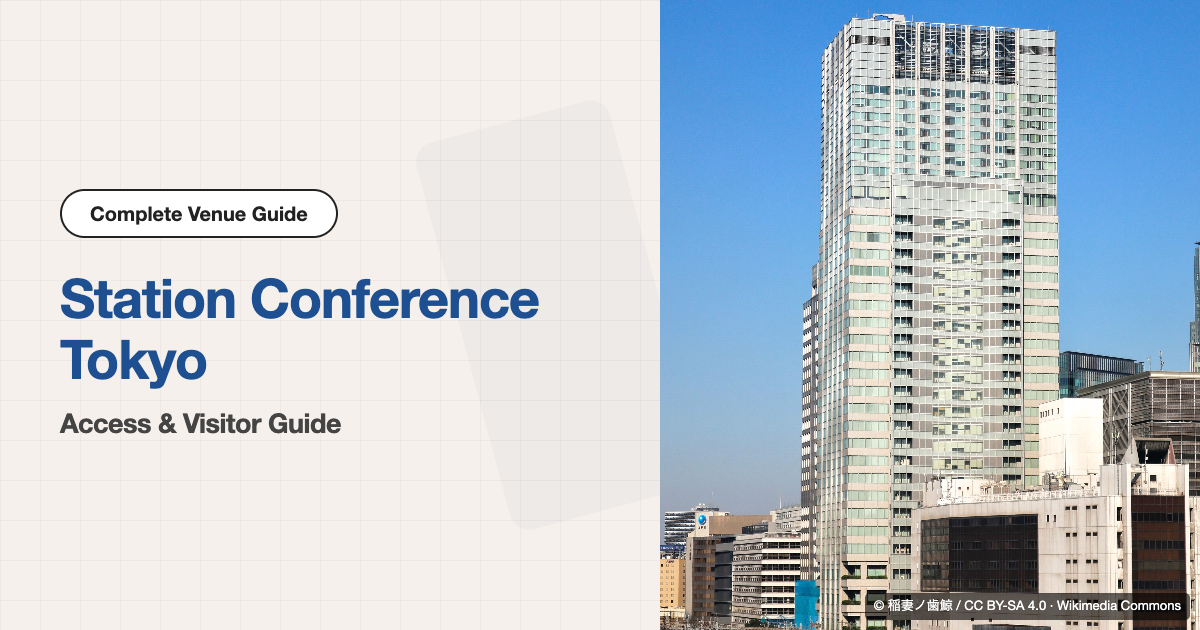
Station Conference Tokyo is one of central Tokyo’s leading conference and rental-meeting facilities, occupying floors 4–6 of Sapia Tower, the twin-tower building directly in front of JR Tokyo Station’s Nihonbashi Exit. Its location — directly connected to one of Japan’s largest terminal stations, where Shinkansen, JR lines, and subways all converge — offers unmatched access for large-scale conferences drawing attendees from across Japan and overseas. Guests can reach the venue immediately after exiting the ticket gates, making it easy for first-time visitors to Tokyo to find their way and allowing entry without stepping outside even in bad weather.
The facility comprises 26 room types of varying sizes, and movable partitions allow it to be reconfigured into up to 44 different layouts. The main hall on the 5th floor seats up to 500, accommodating international academic assemblies and large corporate conferences, while floors 4 and 6 offer smaller meeting rooms suited to breakout sessions, negotiations, and staff or holding rooms. A dedicated event-support team is in place, making this a venue you can entrust with complex programs that run multiple rooms in parallel.
This guide covers practical information including how to reach Station Conference Tokyo from major airports and train stations, the layout of its meeting rooms and halls, accommodation options nearby, recommended dining in the area, and tips to know before your visit.
Getting to Station Conference Tokyo
Station Conference Tokyo connects directly to JR Tokyo Station’s Nihonbashi Exit, is about a 2-minute walk from the Yaesu North Exit, and is also accessible from the Tokyo Metro Tozai Line’s Otemachi Station. With well-established routes from both Narita and Haneda airports to Tokyo Station, guiding international guests is straightforward, and the fully indoor route from station to venue is a real advantage for running large-scale events.
Nearest Stations and Exits for Station Conference Tokyo
Station Conference Tokyo is accessible from three directions: JR Tokyo Station’s Nihonbashi Exit, its Yaesu North Exit, and Tokyo Metro Tozai Line’s Otemachi Station.
JR Tokyo Station (Nihonbashi Exit)
Exit through the Shinkansen Nihonbashi Exit ticket gate and Sapia Tower stands directly in front of you; take the elevator up to the venue floors (4–6). This is the most recommended route for guests arriving by Shinkansen or Narita Express.
Walking time: Approx. 1 minute (official website)
JR Tokyo Station (Yaesu North Exit)
Sapia Tower is also reachable from the Yaesu North Exit ticket gate, with easy access from the Yaesu Underground Mall and the Daimaru Tokyo department store side.
Walking time: Approx. 2 minutes (official website)
Tokyo Metro Tozai Line, Otemachi Station
Otemachi Station’s Exit B7 is closed for nearby construction work (closure period: through the end of March 2028). Visitors arriving via Otemachi Station should instead use the “Sapia Tower Connection Entrance” (open 7:00 a.m.–11:00 p.m.), located at the top of the stairs behind the former Exit B7. It connects to Sapia Tower via an underground passage, so visitors coming from along the Tozai Line can reach the venue without getting wet.
From Narita Airport
- JR Narita Express (N’EX) + walk: Narita Express from Narita Airport Station to JR Tokyo Station, approximately 60 minutes, fare around JPY 3,070. At Tokyo Station, head for the Nihonbashi Exit and the directly connected Sapia Tower. A reliable, transfer-free route that is easy to guide guests with heavy luggage along.
- Keisei Skyliner + JR: Keisei Skyliner from Narita Airport toward Nippori / Keisei Ueno (approximately 45 minutes), then transfer at Nippori to the JR Yamanote or Keihin-Tohoku Line to Tokyo Station. Total around 75 minutes including transfer time. A good option for keeping costs down while retaining speed.
- Taxi: From Narita Airport via the Metropolitan Expressway to the Tokyo Station area, approximately 70 minutes, fare around JPY 30,000–35,000. Suitable for multi-person VIP transfers or late-night arrivals. Travel time varies with expressway traffic.
From Haneda Airport
- Tokyo Monorail + JR: Tokyo Monorail from Haneda Airport to Hamamatsucho, then transfer to the JR Yamanote or Keihin-Tohoku Line to Tokyo Station. Total approximately 45 minutes, fare around JPY 700. The standard cost-effective route and the default choice for most business travelers.
- Airport Limousine Bus: Limousine bus from Haneda Airport bound for the Tokyo Station area, approximately 40–60 minutes, fare around JPY 1,000. Transfer-free and convenient for guests with large luggage, though travel time varies with road conditions.
- Taxi: From Haneda Airport via the Metropolitan Expressway to the Tokyo Station area, approximately 35 minutes, fare around JPY 7,000–10,000. No transfers required — convenient for late-night arrivals or guests with heavy luggage.
Venue Quick Reference
| Item | Detail |
|---|---|
| Full Name | Station Conference Tokyo |
| Address | Sapia Tower 4F-6F, 1-7-12 Marunouchi, Chiyoda-ku, Tokyo 100-0005 |
| Nearest Station | JR Tokyo Station Nihonbashi Exit, approx. 1-min walk (Yaesu North Exit, approx. 2-min walk); Tokyo Metro Tozai Line Otemachi Station via the Sapia Tower Connection Entrance (former Exit B7; Exit B7 closed through end of March 2028) |
| Official Website | tstc.jp/tokyo |
| Facilities | 26 room types (up to 44 layouts via movable partitions) |
| Inquiries | Via the official website contact desk; dedicated event-support team available |
Recommended Hotels Near Station Conference Tokyo
This section contains affiliate links.
Station Conference Tokyo connects directly to Tokyo Station and Otemachi, and within walking distance are some of Japan’s finest luxury hotels alongside refined properties well suited to business travel. Below are five hotels, easy to choose from according to guest seniority and budget. All are within a few minutes’ walk of the venue, minimizing travel burden even for multi-day events.
The Tokyo Station Hotel
A classic hotel founded in 1915, located inside JR Tokyo Station’s Marunouchi station building. The historic red-brick station building is itself the hotel — a one-of-a-kind experience — with direct access from inside the station. Within walking distance of Sapia Tower, it is ideal for hosting international dignitaries or for events that benefit from the iconic Tokyo Station setting.
Shangri-La Tokyo
A luxury hotel on the upper floors of the Marunouchi Trust Tower Main building. About 1 minute on foot from JR Tokyo Station’s Nihonbashi Exit and 2 minutes from the Yaesu North Exit, it sits on the same Nihombashi/Yaesu side as the venue, making it one of the closest luxury hotels to Station Conference Tokyo. Spacious rooms and refined service deliver high satisfaction for VIP stays and as a base during the event period.
Marunouchi Hotel
Founded in 1924 and located on floors 7–17 of Marunouchi Oazo. About 1 minute on foot from JR Tokyo Station’s Marunouchi North Exit, it features calm guest rooms designed around a “neo-Japanism” concept. Despite its proximity to Tokyo Station, it offers a quiet stay — well suited to guests seeking a balance of business convenience and quality.
Palace Hotel Tokyo
A Forbes Five-Star hotel facing the Imperial Palace’s Wadakura Moat. Directly connected to Otemachi Station and within walking distance of Station Conference Tokyo. Its dining program — featuring several Michelin-starred restaurants — is widely regarded, making it a strong choice for VIP groups looking to consolidate accommodation and high-end dining in one property.
Hotel Ryumeikan Tokyo
A hotel on the upper floors of the Yaesu Ryumeikan Building, distinguished by Japanese-style hospitality. About 3 minutes on foot from JR Tokyo Station’s Yaesu North Exit — the same Yaesu side as the venue — for easy access. With compact yet refined rooms and distinctly Japanese service, it caters broadly to business travelers and inbound guests.
▶ See 10 Recommended Hotels near Station Conference Tokyo
Recommended Restaurants Near Station Conference Tokyo
The Tokyo Station area concentrates station-connected commercial complexes — Marunouchi Building, Shin-Marunouchi Building, KITTE, and Tokyo Station Ichibangai — and offers an abundant selection of dining suited to business occasions and hosting international guests. Below are six picks across key categories, all within walking distance of the venue and easily reached via underground passages.
Japanese
Nana KITTE Marunouchi
A Japanese restaurant in KITTE Marunouchi offering refined dashi-based cuisine, mainly in private rooms. Its calm setting makes it a versatile choice for business meals before or after negotiations, Japanese dinners with international guests, and corporate entertaining — refined without being overly formal.
Sushi
Kushiro KITTE Marunouchi
A charcoal-grill and sushi restaurant in KITTE Marunouchi showcasing Hokkaido ingredients. Fresh seafood is served as nigiri and sashimi, with course menus available. A handy choice for dining during the event period or for introducing international guests to Japan’s sushi culture.
Ramen
Rokurinsha Tokyo Ramen Street
A nationally famous, perpetually queued shop in “Tokyo Ramen Street” on the B1 level of Tokyo Station Ichibangai, known for its rich broth and extra-thick tsukemen noodles. Reachable in a short walk through the station from the venue, it is perfect for letting international guests experience Japan’s ramen culture. Expect a wait during peak times.
Italian
AWkitchen TOKYO Shin-Marunouchi
A casual Italian restaurant on the 5th floor of the Shin-Marunouchi Building, built around farm-fresh vegetables. Enjoy bagna cauda and pasta in a bright, open space. Easy to use from lunch through dinner, it suits first meetings with international guests and casual team dinners.
Izakaya
Jibundoki Marunouchi Center Building
An izakaya in the Marunouchi Center Building with all private rooms. With Japanese-focused dishes enjoyed in privacy, it suits relaxed networking occasions — social gatherings with international guests, after-parties following a banquet, and internal team dinners.
Café
Horiguchi Coffee Otemachi One
A specialty coffee shop on the 1st floor of Otemachi One in Otemachi, within walking distance toward Otemachi from the venue and open from early morning on weekdays. Ideal for early-morning meeting preparation, a pre-negotiation pause, or short informal meetings with international guests outside the venue.
Wi-Fi and Facilities at Station Conference Tokyo
- Wi-Fi: Wi-Fi equipment (router, etc.) is available for rental. For reference, a dedicated wired internet line is available at ¥33,000/day (tax included), with one line provided on each of the 4th, 5th, and 6th floors; speeds are up to 2Gbps down / 1Gbps up (best-effort, with measured actual speeds of 800-950Mbps) (Official PDF).
- Smoking Area: Use of fire within the building or its premises is prohibited, and smoking is only permitted in company-designated locations (Official Site).
- Hours & Extensions: Open year-round except for the year-end and New Year holidays, with facility hours generally 9:00-21:00. Reservations open 6 months before the usage date (1 year before for full-floor or full-building rentals) (Official Site).
- Parking: Pay-by-time parking is available within Sapia Tower, which houses the facility (Official Site).
- Loading and Unloading: Loading and unloading begin after check-in procedures at the basement-level (B1F) cargo handling area (height limit 2.7m; a pre-submitted work notification form must be brought). For use of the 4th, 5th, or 6th floors, loading and unloading must use the designated E1 elevator (door dimensions W1,100 x H2,390mm; car interior W1,800 x D2,000 x H2,400mm (max H3,600mm); load capacity 2,500kg) (Official PDF).
- Accessibility: Guide dogs, service dogs, and hearing dogs are permitted (other animals may not be brought into the building) (Official Site).
- Outside Food and Drinks: For hygiene reasons, guests are asked to refrain from bringing outside food and drinks into the facility, and to use the catering service instead (Official Site).
Tips Before You Visit
🚉 Share the Location of Tokyo Station’s “Nihonbashi Exit” in Advance
Sapia Tower stands directly in front of Tokyo Station’s Nihonbashi Exit. Compared with the Marunouchi and Yaesu exits, the Nihonbashi Exit sees fewer users and is somewhat distant from the Shinkansen platforms, so telling first-time guests clearly to “head for the Nihonbashi Exit” prevents confusion. Stating the exit name explicitly in your event guidance is the safe approach.
🚇 The Yaesu and Marunouchi Sides Differ Greatly in Atmosphere and Routing
Tokyo Station has two distinct faces: the “Marunouchi” side toward the Imperial Palace, and the “Yaesu” side where commercial complexes cluster. Because the venue is on the Nihonbashi / Yaesu North side, guests from Marunouchi-side hotels must pass through the station or underground passages. For guests staying on the Marunouchi side, brief them in advance on the cross-station route and the time it takes.
🚶 Plan for Concourse Walking Time at a Massive Terminal
Tokyo Station is one of Japan’s largest terminals, where Shinkansen, JR lines, and subways converge. Depending on the platform or gate, reaching the Nihonbashi Exit can mean nearly a 10-minute walk through the concourse. Calculate arrival times to include this walking time, and advise guests arriving by Shinkansen to plan with extra buffer.
🌧️ Move Without Getting Wet via the Underground Passage Network
Sapia Tower connects underground to Tokyo Station and Otemachi Station, so using the Yaesu Underground Mall or the passages toward Otemachi lets guests reach the venue indoors even in rain. Including the underground route in pre-event guidance helps guests arriving by Narita Express or Shinkansen, as well as those staying at Otemachi-side hotels.
🕗 Weekday Rush Hours Make the Concourse Extremely Crowded
Tokyo Station’s concourse becomes extremely crowded with commuters on weekday mornings (around 8:00–9:00) and evenings (around 18:00–19:00). When moving in large groups during these hours, bottlenecks tend to form at gates and escalators, so shifting your meet-up and dismissal times slightly off the commuter peak keeps group flow smooth.
🏢 Understand the Floor Layout Within Sapia Tower
The venue is split across floors 4–6, with room sizes differing by floor. For events using multiple floors, clarifying which room on which floor each participant should head to — via signage and printed materials — keeps day-of movement organized. Elevators get crowded at peak times, so designing the program so that entries and exits during breaks don’t all concentrate at once is reassuring.
🍴 Nearby Restaurants Are Busy at Weekday Lunch; Some Close on Weekends
As a business district, restaurants around Tokyo Station are very crowded at weekday lunch, while some shops inside office buildings close on weekends and public holidays. If you plan meals or social gatherings, make reservations in advance, and for weekend events, confirm operating days. Station-connected complexes (Marunouchi Building, KITTE, Tokyo Station Ichibangai, etc.) keep many shops open on weekends, so using them selectively is effective.
This guide is based on official sources and publicly available information as of its publication date. Access routes, operating hours, and venue details are subject to change. Please verify the latest information via the official links provided.
Meeting Rooms and Halls at Station Conference Tokyo
Station Conference Tokyo spans three floors of Sapia Tower (4–6) with 26 room types of varying sizes. Movable partitions allow reconfiguration into up to 44 different layouts, enabling a multi-layered program — from a 500-capacity assembly to small executive meetings, negotiations, and holding rooms — all within a single venue. The recommended capacities for each floor are as follows.
5th Floor (Main Hall and Large Meeting Rooms)
| Item | Detail |
|---|---|
| Number of Rooms | 8 rooms |
| Recommended Capacity | 21–436 guests |
| Main Hall | Up to 500 guests / 353 m² |
The 5th floor is the facility’s core, anchored by the main hall (353 m²) seating up to 500. It supports flagship programs such as international academic assemblies, corporate kickoffs, award ceremonies, and large seminars.
4th Floor (Small and Medium Meeting Rooms)
| Item | Detail |
|---|---|
| Number of Rooms | 7 rooms |
| Recommended Capacity | 10–207 guests |
The 4th floor ranges from small meeting rooms for around 10 people to medium rooms for over 200. It suits multi-purpose use in combination with the main hall — breakout sessions, workshops, and negotiation spaces.
6th Floor (Small and Medium Meeting Rooms)
| Item | Detail |
|---|---|
| Number of Rooms | 11 rooms |
| Recommended Capacity | 18–352 guests |
The 6th floor has the most rooms of the three floors, accommodating a wide range from 18 to over 350 guests. It flexibly supports conferences running multiple sessions in parallel, as well as holding rooms and secretariat space. Please check the official website for detailed specifications and floor plans for each room.